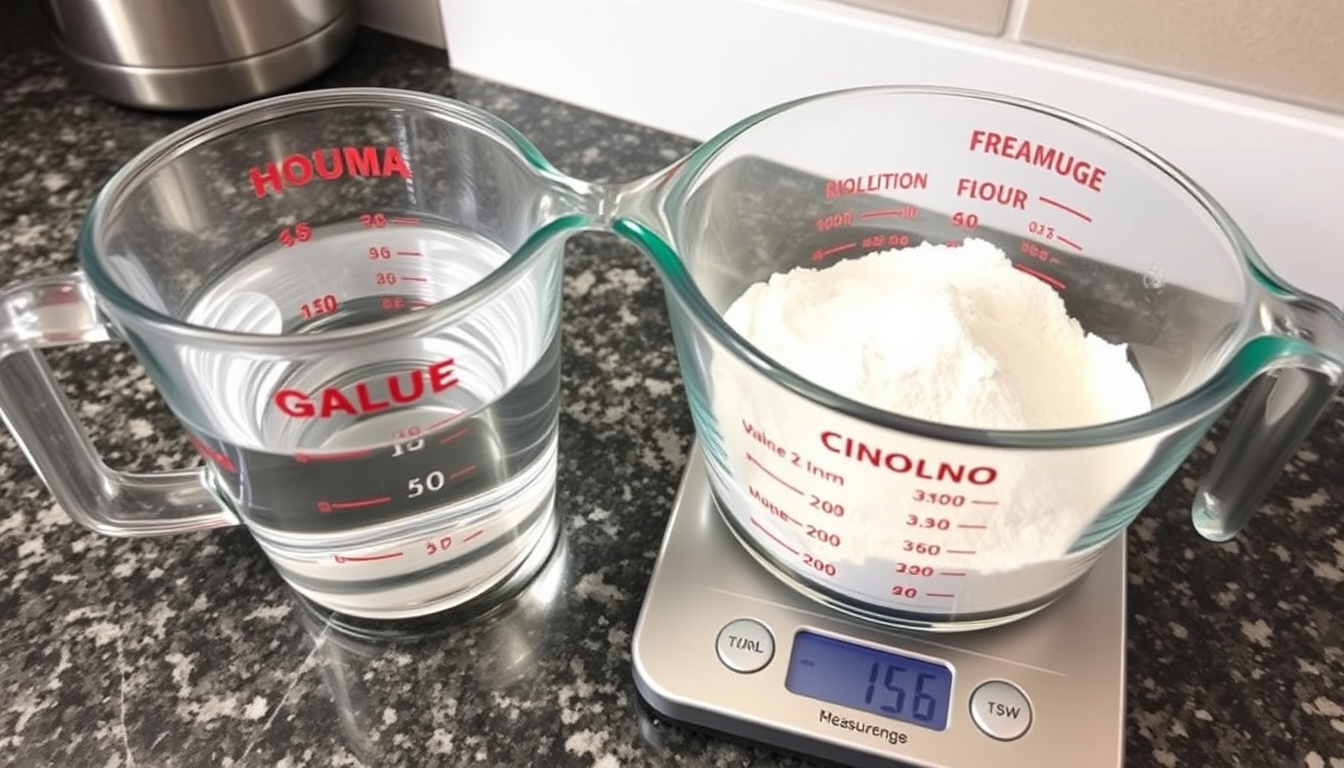
Anyone who’s ever followed a recipe knows the moment of doubt: is that 15 oz can of pumpkin exactly what the recipe means by “2 cups”? The answer isn’t always straightforward because ounces measure weight or volume depending on the ingredient. This guide breaks down the conversion for 15 oz to cups, covering liquid, dry, and common can sizes so you never have to guess.
1 cup = 8 fluid ounces (US customary): 1 cup = 8 fl oz · 15 fluid ounces = 1.875 cups: 1.875 cups (exactly) · 15 oz (dry weight) depends on ingredient density: varies; e.g., 15 oz all-purpose flour ≈ 3.4 cups
Quick snapshot
- 15 fl oz = 1.875 cups (exactly) (Omni Calculator (conversion tool))
- Formula: divide by 8 (Inch Calculator (measurement reference))
- Flour: ~3.4 cups (Baking Like a Chef (baking reference))
- Sugar: ~2.1 cups (Zidan Packaging (packaging guide))
- Volume equivalent ≈ 1.875 cups (Chef Lola’s Kitchen (cooking resource))
- 1 cup = 8 oz, not 16 oz (100 Days of Real Food (whole foods resource))
Five key equivalences, one pattern: the difference between fluid ounces and weight ounces changes everything.
| 1 US cup = | 8 fluid ounces |
| 15 fluid ounces = | 1.875 cups |
| 15 oz (all-purpose flour) ≈ | 3.4 cups |
| 15 oz (granulated sugar) ≈ | 2.1 cups |
| Standard 15 oz can volume ≈ | 1.875 cups |
What is the equivalent of 15 fluid ounces in cups?
How many cups is 15 fl oz?
15 US fluid ounces converts exactly to 1.875 cups. This is because 1 US cup holds 8 fluid ounces, so dividing 15 by 8 gives 1.875. The Omni Calculator (conversion tool) confirms this precise figure.
15 oz to cups conversion formula
To convert any number of fluid ounces to cups, divide by 8. As Inch Calculator (measurement reference) explains, the formula is: cups = fluid ounces ÷ 8. For 15 oz: 15 ÷ 8 = 1.875 cups.
Why is 15 fl oz not a round number of cups?
Because the cup (8 oz) does not divide evenly into 15. Many people expect a neat whole number, but 15 is 1.875, not 2. The Chef Lola’s Kitchen (cooking resource) notes this is a common source of confusion in recipes.
Even a ⅛ cup difference can affect baking results. In custards or cakes, a extra tablespoon of liquid can alter texture significantly.
The implication: if a recipe calls for 2 cups and you use a 15 oz can, you’ll be short by ⅛ cup — a small but measurable difference for precise baking.
How many cups is a 15 oz can?
What foods come in 15 oz cans?
Pumpkin puree, beans, tomatoes, coconut milk, and chickpeas are among the most common items packed in 15 oz cans in US grocery stores. The Omni Calculator (conversion tool) confirms that the volume inside such a can is roughly 1.875 cups when the content is liquid or semi-liquid.
Does a 15 oz can contain fluid ounces or weight ounces?
Most 15 oz cans list net weight in avoirdupois ounces (weight), not fluid ounces. For dense solids like beans, the actual volume may be less than 1.875 cups. The Chef Lola’s Kitchen (cooking resource) advises checking the label: if it says “15 oz net wt,” assume weight, not volume.
How to measure a 15 oz can’s content in cups
For a accurate cup measurement, empty the can into a liquid measuring cup. If the food is solid (e.g., whole beans), drain and use a dry measuring cup. According to 100 Days of Real Food (whole foods resource), spoon and level dry ingredients rather than packing them.
The pattern: a 15 oz can delivers about 1.875 cups of liquid, but for solids, the actual cup volume may vary by up to 20%.
Is 15 oz equal to 2 cups?
Why do people think 15 oz = 2 cups?
Because 16 oz equals exactly 2 cups, it’s easy to round 15 up to 16. The Chef Lola’s Kitchen (cooking resource) highlights that this rounding error is especially common when using 15 oz cans in recipes that call for 2 cups.
Difference between 15 oz and 16 oz
15 oz is exactly 1 oz less than 16 oz. In cups, that’s 1.875 cups versus 2 cups — a ⅛-cup gap. The Omni Calculator (conversion tool) shows the precise split.
How to remember 1 cup = 8 oz
A simple trick: 8 + 8 = 16, so 2 cups = 16 oz. Therefore 1 cup = 8 oz. The Chef Lola’s Kitchen (cooking resource) recommends repeating “8 oz in a cup” until it sticks.
The catch: trusting a rounded conversion (15 = 2 cups) can throw off ratios in recipes that require precision, like bread or pastry dough.
How many cups is 15 oz dry?
Why dry ounces differ from fluid ounces
Dry ounces measure weight, fluid ounces measure volume. The Chef Lola’s Kitchen (cooking resource) explains that the two are not interchangeable because ingredient density varies.
15 oz flour to cups
All-purpose flour weighs about 4.4 oz per cup. So 15 oz of flour equals roughly 3.4 cups (15 ÷ 4.4). The Baking Like a Chef (baking science blog) provides this weight-per-cup figure.
15 oz sugar to cups
Granulated sugar is denser, about 7.0 oz per cup. That makes 15 oz approximately 2.1 cups (15 ÷ 7). According to Zidan Packaging (packaging guide), this conversion works well for typical white sugar.
Many American recipes list both weight and volume — but without specifying which, assume weight for dry and volume for liquid. Using a volume measure for a weight ingredient can create errors of over 50%.
Why this matters: trusting a volume conversion for a weight measurement can lead to over 50% error for some ingredients like flour.
Is 1 cup equal to 16 oz?
Why some recipes say 1 cup = 16 oz?
Those recipes are likely referring to weight ounces (16 oz = 1 pound). For volume, the Chef Lola’s Kitchen (cooking resource) clarifies that 1 US cup always equals 8 fluid ounces — not 16. For an accurate conversion of 15 oz to cups, consult Preu iPhone 16e Irlanda.
US customary cup vs. imperial cup
The US customary cup holds 8 fl oz, while the imperial cup (used in some Commonwealth countries) holds 10 imperial fl oz. The Baking Like a Chef (baking science blog) notes that 15 imperial fl oz would equal 1.5 imperial cups, not 1.875.
Remember: 1 US cup = 8 fl oz, 2 cups = 16 fl oz
This fundamental ratio is the key to all liquid conversions. As Chef Lola’s Kitchen (cooking resource) puts it, “Memorize 8, and you’ll never go wrong.”
The trade-off: while imperial cups are larger, most modern recipes and US product labels use US customary units, so stick with 8 oz per cup.
How to Convert 15 oz to Cups: Step-by-Step
Follow these steps to ensure accuracy regardless of ingredient type.
- Step 1: Determine the type of ounce — Check the label or recipe. If the ingredient is liquid (water, milk, oil, broth), it’s fluid ounces. If it’s a dry ingredient (flour, sugar, oats), it’s weight ounces. The Chef Lola’s Kitchen (cooking resource) emphasizes this first distinction to avoid confusion.
- Step 2: Convert fluid ounces to cups — Divide the number of fluid ounces by 8. For 15 fl oz: 15 ÷ 8 = 1.875 cups. Use a liquid measuring cup with clear markings. Refer to Inch Calculator (measurement reference) for a quick check.
- Step 3: Convert weight ounces to cups — Look up the ingredient’s weight per cup. For all-purpose flour, use 4.4 oz per cup (Baking Like a Chef (baking science blog)). For granulated sugar, use 7.0 oz per cup (Zidan Packaging (packaging guide)). Then divide 15 by that number. For best accuracy, 100 Days of Real Food (whole foods resource) recommends using a kitchen scale.
- Step 4: Spoon and level (for dry ingredients) — If you don’t have a scale, spoon the ingredient into a dry measuring cup and level it with a straight edge. Avoid scooping directly — it compacts the ingredient and changes the weight. This technique is endorsed by 100 Days of Real Food (whole foods resource).
The pattern: with these steps, any 15 oz measurement can be confidently converted to cups for accurate cooking and baking.
Expert Perspectives on Measuring 15 oz
“Dry ounces measure weight, not volume. To avoid confusion, always check if your recipe is using fluid ounces or ounces by weight.”
— Chef Lola’s Kitchen (home cooking resource)
“A cup of all-purpose flour weighs about 4.4 ounces. So 15 ounces of flour equals about 3.4 cups.”
— Baking Like a Chef (baking science blog)
“For the most accurate results, spoon flour into your measuring cup and level it with a knife. Never scoop directly.”
— 100 Days of Real Food (whole foods lifestyle site)
For home bakers and cooks in the US, the difference between 15 and 16 ounces can feel trivial, but precision matters in baking. When a recipe calls for 2 cups of pumpkin puree and you’re using a 15 oz can, add an extra 2 tablespoons to reach the full 2 cups — or simply remember: 15 oz is just ⅛ cup shy of 2 cups.
Frequently asked questions
How many cups is 15 fluid ounces?
15 US fluid ounces equals exactly 1.875 cups. This is because 1 cup holds 8 fluid ounces, so 15 ÷ 8 = 1.875.
Is 15 oz a cup and a half?
No, 1.5 cups would be 12 fluid ounces (1.5 × 8 = 12). 15 oz is 1.875 cups, which is between 1½ and 2 cups.
How many cups of flour is 15 oz?
About 3.4 cups of all-purpose flour. One cup of AP flour weighs approximately 4.4 oz, so 15 ÷ 4.4 ≈ 3.4.
How many cups of sugar is 15 oz?
About 2.1 cups of granulated sugar. Sugar weighs about 7.0 oz per cup, so 15 ÷ 7 ≈ 2.14.
Does a 15 oz can of pumpkin equal 2 cups?
No, a 15 oz can of pumpkin puree holds about 1.875 cups (just under 2 cups). For a recipe calling for 2 cups, add 2 additional tablespoons.
What is the difference between 15 fl oz and 15 oz weight?
Fl oz (fluid ounces) measure volume; weight oz (avoirdupois) measure mass. 15 fl oz of water weighs about 15.6 oz, but for denser ingredients the weight varies.
How do I convert 15 oz to cups without a calculator?
Divide by 8 for fluid ounces. 15 ÷ 8 = 1.875. For dry ounces, you need to know the ingredient’s weight per cup (e.g., flour ~4.4 oz/cup, sugar ~7.0 oz/cup).
Related reading
Related stories





Jessica Morin is Provincial Affairs Editor at Toronto Post, covering Ontario policy, provincial politics and regional economics.