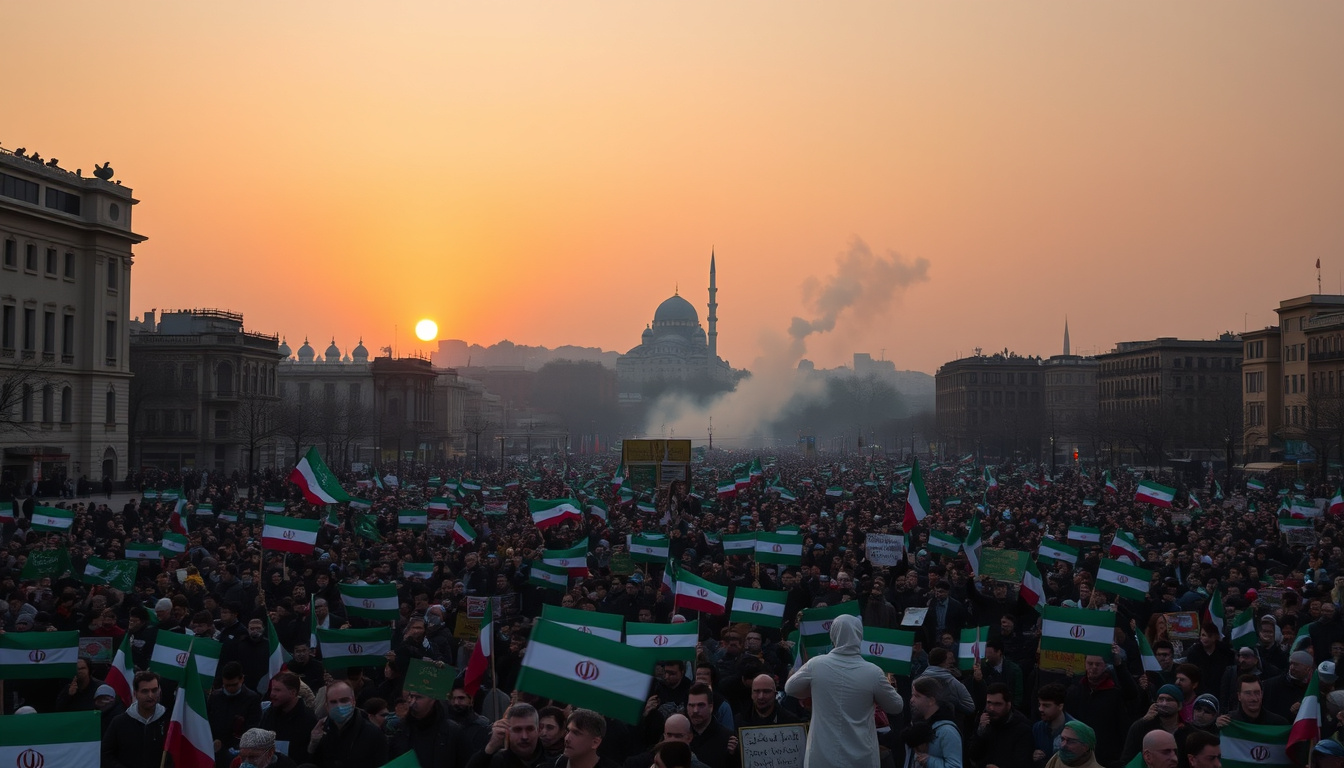
In February 1979, a plane touched down in Tehran carrying a man who had spent 14 years in exile. The images of millions lining the streets to welcome Ayatollah Khomeini back to Iran became the defining symbol of a revolution that would redraw the political map of the Middle East.
Birth: 17 May 1900 (Khomeyn, Iran) ·
Death: 3 June 1989 (Tehran, Iran) ·
Role: First Supreme Leader of Iran (1979–1989) ·
Funeral Attendance: ~10 million (largest funeral in history) ·
Iran-Iraq War: 1980–1988 ·
Known For: Leader of the 1979 Iranian Revolution
Quick snapshot
- Iranian Shia cleric and politician (Britannica)
- Leader of the 1979 Islamic Revolution (HISTORY)
- First Supreme Leader of Iran (1979–1989) (BBC History)
- Overthrew the Pahlavi dynasty (Wikipedia)
- Established the Islamic Republic (Britannica)
- Khomeini returned from exile on February 1, 1979 (RFE/RL)
- Died June 3, 1989, aged 89 (Britannica)
- Funeral attracted ~10 million people (NDTV)
- World’s largest funeral gathering (Britannica)
- Founder of Velayat-e Faqih (Guardianship of the Jurist) (Office of the Supreme Leader)
- Influenced Shia political movements globally (Britannica)
- Iran-Iraq War defined his foreign policy (BBC History)
The seven key facts below trace Khomeini’s personal journey from birth to the highest political office in Iran.
| Field | Value |
|---|---|
| Full Name | Ruhollah Mostafavi Khomeini |
| Born | 17 May 1900, Khomeyn, Iran (Office of the Supreme Leader) |
| Died | 3 June 1989, Tehran, Iran (Britannica) |
| Title | Ayatollah, Grand Ayatollah, Supreme Leader |
| Successor | Ali Khamenei (Wikipedia) |
| Political Affiliation | Islamic Republic Party |
| Children | 7 (including Ahmad Khomeini) |
What was Ayatollah Khomeini known for?
Who is the most famous Ayatollah?
Ayatollah Khomeini is widely recognised as the most famous ayatollah of the 20th century. He led the 1979 Iranian Revolution that overthrew the Pahlavi dynasty and established the Islamic Republic of Iran (Britannica). As the first Supreme Leader, he held ultimate political and religious authority in the country from 1979 until his death (BBC History). He was also a Shia marja’ (Grand Ayatollah), the highest rank in Shia clerical hierarchy.
What is Khomeinism?
Khomeinism refers to the political ideology developed by Khomeini, centred on velayat-e faqih — the guardianship of the Islamic jurist. This doctrine holds that a qualified Shia jurist should serve as the supreme political and religious authority (Britannica). It became the constitutional foundation of the Islamic Republic of Iran.
Khomeini’s innovation was fusing clerical authority with state power. No previous Shia scholar had attempted to turn a seminary rank into a political office with executive control over a nation of 40 million people.
The implication: Khomeini transformed centuries of Shia quietism into a revolutionary model that continues to shape governance in Iran and inspire movements across the region.
Why did Saddam fight Khomeini?
What was the Iran-Iraq War?
The Iran-Iraq War (1980–1988) was a devastating conflict triggered by multiple factors. Khomeini had called for Shia uprisings in Iraq, threatening Saddam Hussein’s regime (Britannica). Saddam feared the Iranian Revolution would inspire Iraq’s Shia majority to rebel. Border disputes and competition over oil rights in the Shatt al-Arab waterway added to the tensions. The war lasted eight years and cost hundreds of thousands of lives (BBC History).
How did the war end?
The conflict ended on 20 August 1988 with United Nations-brokered ceasefire Resolution 598. Khomeini described accepting the ceasefire as “drinking poison” (RFE/RL). The war left both countries economically exhausted and solidified Iran’s narrative of resistance.
The pattern: Khomeini’s revolutionary rhetoric clashed directly with Saddam’s secular Arab nationalism — a ideological showdown that engulfed a region.
How many people died at Ayatollah Khomeini’s funeral?
What is the biggest funeral ever attended?
Khomeini’s funeral on 4 June 1989 in Tehran was attended by an estimated 10 million people, making it the largest funeral in recorded history (Britannica). Other sources describe the crowd size as “millions” but place the figure conservatively between 2 and 10 million due to imprecise counting methods (NDTV). The sheer scale led to a stampede that killed several people.
What was the cause of Khomeini’s death?
Khomeini died on 3 June 1989 in Tehran after a heart attack, according to official reports (Britannica). Some sources note complications from surgery as a contributing factor. He was 89 years old.
The man who spent 14 years in exile and called for political Islam was buried not as a cleric but as a head of state — his funeral procession became a mass political demonstration, not a religious ritual.
The trade-off: the record-breaking crowd size reflected Khomeini’s immense popularity among his supporters, but the chaos and deaths during the funeral also exposed the challenges of managing a revolutionary legacy in transition.
What does ‘Ayatollah’ mean?
What is the difference between Ayatollah and Grand Ayatollah?
“Ayatollah” literally means “sign of God” in Arabic. It is a title used for high-ranking Shia clergy, particularly Twelver Shia scholars who have achieved a level of expertise in Islamic jurisprudence (Britannica). A Grand Ayatollah (Marja’) is the highest rank — a source of emulation whose interpretations can be followed by millions of Shia globally. Khomeini held the rank of Grand Ayatollah.
How is an Ayatollah appointed?
The title is not formally bestowed but emerges from recognition by peers and followers. A scholar must demonstrate deep knowledge of Shia law, publish widely, and gain acceptance from established marja’s. The title became common during the Qajar era in Iran, though its roots go back to early Shia scholarship.
What this means: the path to becoming an ayatollah is a bottom-up process of scholarly reputation, not a top-down appointment — which made Khomeini’s transition from religious authority to political ruler all the more remarkable.
Who was the first Ayatollah?
Who succeeded Ayatollah Khomeini?
The title “ayatollah” has ancient roots; there is no single “first ayatollah” — it emerged organically among Shia scholars over centuries. However, Khomeini is by far the most famous holder of the title. Upon his death, Ali Khamenei was selected as the second Supreme Leader of Iran (Wikipedia). Khamenei had been President of Iran at the time and was elevated after Khomeini’s death.
What happened after Khomeini’s death?
Khomeini’s death triggered a leadership transition. The Assembly of Experts elected Khamenei as Supreme Leader in June 1989. The event also sparked a brief succession crisis and later led to the elimination of the prime minister post. The Islamic Republic’s structure remained intact, but Khamenei lacked Khomeini’s clerical rank — a deliberate accommodation that allowed a mid-ranking cleric to hold the highest office.
The catch: Khomeini’s unique stature made him irreplaceable. After his death, Iran’s system had to adapt to a Supreme Leader who was not a Grand Ayatollah — a constitutional compromise that still shapes Iranian politics today.
Timeline signal
These dates mark the key inflection points in Khomeini’s life and their geopolitical consequences.
| Date | Event | Source |
|---|---|---|
| 17 May 1900 | Born in Khomeyn, Iran | Office of the Supreme Leader |
| 1963 | Exiled to Turkey, then Iraq, then France | BBC History |
| 1 February 1979 | Returns to Iran from exile | RFE/RL |
| 11 February 1979 | Iranian Revolution triumphs; Khomeini becomes Supreme Leader | HISTORY |
| 22 September 1980 | Iran-Iraq War begins | BBC History |
| 20 August 1988 | Iran-Iraq War ends | RFE/RL |
| 3 June 1989 | Khomeini dies of a heart attack | Britannica |
| 4 June 1989 | Funeral attended by ~10 million; stampede kills many | NDTV |
| June 1989 | Ali Khamenei succeeds as Supreme Leader | Wikipedia |
Clarity
Confirmed facts
- Birth and death dates (Britannica)
- Role in Iranian Revolution (HISTORY)
- Establishment of Islamic Republic (Britannica)
- Funeral attendance in millions (NDTV)
- Succession by Ali Khamenei (Wikipedia)
What’s unclear
- Exact number of deaths at funeral (estimates vary from 10 million to lower) (Britannica)
- Cause of death (officially heart attack, but some cite complications from surgery) (Britannica)
Quotes
“We did not create a revolution to have a different government; we created a revolution to have Islam.”
— Ayatollah Khomeini
“Imam Khomeini revived Islam and gave it a political identity.”
— Ali Khamenei (Khamenei.ir)
Khomeini’s revolution did not end with his death. The model of clerical rule he institutionalised now governs over 85 million Iranians. For the West, the relationship with Iran remains defined by the rupture of 1979 — a rupture that began when a cleric stepped off a plane in Tehran. For scholars and policymakers alike, the lesson is clear: Khomeini’s fusion of religion and state created a system that outlived its founder, but cannot replicate his authority.
encyclopedia.com, en.wikipedia.org, biography.com, bbc.com, ebsco.com
Frequently asked questions
What religion was Iran before the advent of Islam?
Before the Islamic conquest in the 7th century, Iran was predominantly Zoroastrian, with significant Christian, Jewish, and Buddhist minority communities.
How did Ali Khamenei lose his arm?
Khamenei’s right arm was permanently injured in 1981 by a bomb hidden inside a tape recorder at a press conference. The assassination attempt left him with limited use of the arm.
How old was Ayatollah Khomeini when he died?
He was 89 years old at the time of his death on 3 June 1989.
How many children did Ayatollah Khomeini have?
Khomeini had seven children, including his son Ahmad Khomeini who played a key role in the revolution.
Who was Ayatollah Khomeini’s wife?
Khomeini married Khadijeh Saqafi in 1928. She was his lifelong companion and died in 2009.
What is Khomeinism?
Khomeinism is the political ideology of Ayatollah Khomeini, based on the doctrine of velayat-e faqih (guardianship of the jurist), which holds that a qualified Islamic jurist should be the supreme political leader.
Related stories





Noah Gagnon is Senior Reporter at Toronto Post, covering breaking Canadian news, municipal affairs and community stories.