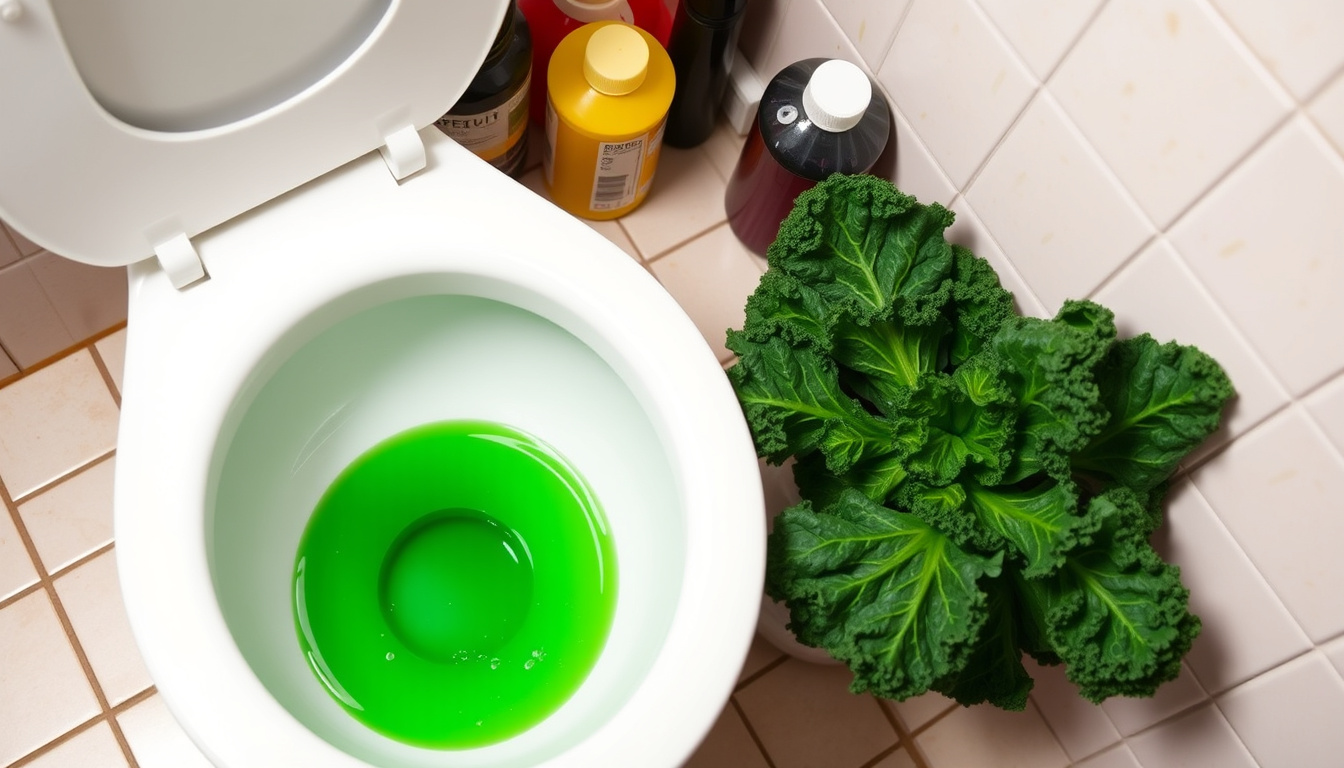
You glance down and something looks… off. Green. If you’ve ever found yourself searching “why is my poop green,” you’re definitely not alone—and in most cases, there’s nothing wrong. The answer usually comes down to what you ate, a medication you’re taking, or digestion moving faster than usual. Mayo Clinic identifies green vegetables, food dyes, and iron supplements among the most common triggers. Let’s break down exactly what’s happening inside your gut.
Most common cause: Food moving too quickly through intestines (Mayo Clinic) ·
Infection examples: Salmonella, E. coli, norovirus (Cleveland Clinic) ·
Dietary trigger: Leafy greens high in chlorophyll (Northwestern Medicine) ·
Typical resolution: Harmless and temporary (Ubie Health) ·
When to worry: Persistent with pain or other symptoms
Quick snapshot
- Diet and diarrhea cause green poop (Mayo Clinic, Healthline)
- Bile from the liver gives stool its brown color (Ubie Health)
- Leafy greens like spinach are a top trigger (Mayo Clinic)
- Infections from Salmonella to norovirus can turn stool green (Cleveland Clinic)
- Exact role of stress in triggering green stool
- Specific long-term health outcomes from chronic green stool
- Whether high-fiber diets without chlorophyll cause green stool
- Monitor duration: a few days is normal, over a week warrants a doctor’s visit
- Track accompanying symptoms like fever, abdominal pain, or dehydration
- Review recent dietary changes or new medications with your physician
- Green stool usually self-resolves in days once the trigger is removed
- Dietary causes clear within 1–3 days typically
- Infection-related cases depend on the pathogen and treatment
Here’s a quick reference for the most common patterns and what they typically mean.
| Category | Details |
|---|---|
| Primary trigger | Intestines too quick for bile breakdown |
| Top foods | Spinach, kale, broccoli |
| Infection count | Bacterial, viral, parasitic |
| Resolution time | Usually self-fixes in days |
What does it mean when you poop green?
Green stool happens when something disrupts the normal coloring process in your intestines. Bile, the greenish fluid produced by your liver to digest fats, normally breaks down as it travels through your digestive system, turning stool brown by the time it exits. When things move faster than usual—say, from diarrhea or a high-speed digestive transit—bile doesn’t have time to complete that transformation, leaving your poop green.
“Food may be moving through the large intestine too quickly, such as due to diarrhea. As a result, bile doesn’t have time to break down completely.”
— Mayo Clinic, gastrointestinal medical authority
The most common trigger is what you eat. A diet high in green vegetables like spinach, kale, and broccoli delivers extra chlorophyll, the pigment that gives plants their color, directly into your system. According to Mayo Clinic (authoritative medical institution), leafy greens are the leading dietary cause of green stool in adults and children.
Dietary causes
- Spinach, kale, and broccoli (chlorophyll content)
- Blueberries and purple/red foods (can produce greenish tint)
- Food dyes in candy, sports drinks, and processed snacks
- Chlorophyll supplements like matcha or spirulina
Digestive speed issues
Beyond food, any condition that accelerates digestion can leave bile unprocessed. Mayo Clinic (gastrointestinal medical authority) notes that diarrhea specifically prevents bile from breaking down completely, resulting in green-tinged stool. This explains why some people see green poop during illness even without eating anything green.
For most adults, green stool is a passing curiosity tied directly to what landed on your plate—whether that’s a spinach salad or a handful of blue Gatorade. Unless it lingers, there’s nothing medical to address.
Why is my poop green and my stomach hurts?
When green stool comes paired with abdominal pain, nausea, or cramping, an infection is often to blame. Northwestern Medicine (academic medical center) points to bacterial pathogens like Salmonella and E. coli as common culprits that inflame the gut lining, speed up digestion, and produce green stools alongside discomfort.
Viral infections work similarly. Manhattan Gastroenterology (specialty GI practice) notes that norovirus, the infamous stomach bug that spreads through cruise ships and daycare centers, frequently causes green-tinged stool because the virus dramatically speeds up intestinal transit time. Your body is trying to flush the pathogen, and the result is stool that hasn’t had time to brown.
“Greenish stool could indicate bacterial infection like salmonella or E. coli.”
— Cleveland Clinic, medical authority
Infection links
- Salmonella from undercooked poultry, eggs, or contaminated produce
- E. coli from raw sprouts, unpasteurized juices, or undercooked beef
- Norovirus from infected surfaces, food handlers, or close contact
- Giardia from contaminated water sources (hiking, camping)
Diarrhea connection
Diarrhea itself is both a cause and a symptom. When your intestines contract rapidly (due to infection, food intolerance, or stress), food moves through in hours instead of days. Bile, still green when it enters the colon, never gets the chance to oxidize and brown. Healthline (doctor-reviewed health platform, updated February 1, 2024) confirms that rapid transit from diarrhea is one of the most reliable ways to produce green stool, regardless of what you ate.
Patients with chronic digestive conditions like Crohn’s disease or celiac disease may see recurring green stool because inflammation constantly accelerates their gut motility. This isn’t an acute problem to solve with antidiarrheals—managing the underlying condition is what changes the stool color.
Does green poop mean bad liver?
The short answer: not typically. Your liver produces bile, which is green—yes—but the coloring process happens downstream in your intestines, not in the liver itself. Unless you have an obstruction in your bile ducts or a serious liver dysfunction causing jaundice (which turns stool pale, not green), your liver is almost certainly fine.
What’s actually happening when stool stays green is that bile is arriving in the colon before it has time to be chemically altered by gut bacteria. This can happen from faster transit, antibiotic disruption of gut flora, or simply high bile production from a high-fat diet. None of these indicate liver damage.
Liver myths
- Green stool does NOT indicate hepatitis or liver failure
- Jaundice (yellow skin, pale stools) is the actual liver-warning sign
- Having your gallbladder removed doesn’t damage your liver—bile just flows more continuously
Actual triggers
If you had your gallbladder removed, you might notice greener stool because bile no longer gets stored and concentrated—it drips straight from your liver into your intestines. Northwestern Medicine confirms this is a temporary, harmless side effect of the surgery, not a sign of complications. The stool typically returns to normal brown within a few weeks as your system adjusts.
The implication: green stool after gallbladder removal is normal and self-resolving, not a reason for alarm.
Does stress cause green poop?
The connection between stress and green stool is indirect but plausible. Stress affects your gut through the gut-brain axis, potentially accelerating digestion or triggering diarrhea in some people. When digestion speeds up, bile doesn’t have time to break down, which could theoretically result in green stool.
However, no direct studies confirm stress as a primary cause of green poop. The relationship likely works through stress-induced changes in gut motility rather than a specific physiological pathway. If you notice green stool during stressful periods, it may be worth tracking whether diarrhea or faster transit accompanies it.
Stress effects
- Stress may speed up gut motility indirectly leading to green stool
- No direct evidence links stress alone to persistent green stool
- Managing stress may help normalize stool color if rapid transit is the cause
Indirect links
If stress triggers diarrhea or irritable bowel symptoms, that accelerated transit could produce green stool. The mechanism is the same as with infections or dietary triggers—bile reaches the colon before it can turn brown. Addressing the underlying stress or digestive issue typically resolves the stool color.
What this means: stress-related green stool, if it occurs, stems from faster digestion rather than a direct effect of stress hormones on stool color.
When is green poop serious?
Green stool is usually harmless and temporary, resolving within a few days once the trigger (such as a green food or a short bout of diarrhea) is removed. Ubie Health confirms that most cases are benign and linked to diet, supplements, or faster digestion.
However, certain signs warrant a doctor’s visit. Persistent green stool lasting more than a week, especially when accompanied by fever, severe abdominal pain, dehydration, or weight loss, could indicate an infection or underlying condition requiring medical attention.
Duration flags
- A few days: normal, likely dietary or temporary transit change
- Over a week: consider seeing a healthcare provider
- Chronic (weeks to months): may indicate bile acid malabsorption or inflammatory condition
Accompanying symptoms
Pay attention to symptoms beyond stool color. According to Manhattan Gastroenterology (specialty GI practice), bacterial infections like Salmonella or E. coli often produce green stool alongside diarrhea, fever, and cramping. Viral infections such as norovirus may cause green-tinged stool with nausea and vomiting.
Contact a healthcare provider if green stool persists beyond a week, or if you experience fever, severe abdominal pain, bloody stool, signs of dehydration, or unexplained weight loss alongside the discoloration.
When to worry: green stool becomes a medical concern when it persists, recurs frequently, or occurs with other concerning symptoms like fever, pain, or dehydration.
goodrx.com, ubiehealth.com, mayoclinic.org, medicalnewstoday.com, vinmec.com, buzzrx.com
Green poop often stems from instant poop triggers like certain foods that accelerate digestion, leaving bile undigested and vividly colored.
Frequently Asked Questions
Is green poop a virus?
Green poop can be caused by viral infections, but it isn’t automatically a sign of infection. Viruses like norovirus speed up intestinal transit, preventing bile from turning brown. However, most cases of green stool are dietary or medication-related, not viral.
What virus turns poop green?
Norovirus is a common viral culprit associated with green-tinged stool. It dramatically accelerates intestinal transit, leaving bile unprocessed. Other viruses, including some rotavirus strains in children, may also cause similar effects.
Will green poop fix itself?
Yes, in most cases green stool resolves on its own within 1–3 days when the trigger (such as green vegetables, food dyes, or a brief bout of diarrhea) is removed. Infection-related cases depend on the pathogen and may require treatment.
Which disease causes green stool?
Diseases that speed up digestion or affect bile processing can cause green stool. These include bacterial infections (Salmonella, E. coli), viral infections (norovirus), parasitic infections (Giardia), and chronic conditions like Crohn’s disease or celiac disease. Most cases, however, are not disease-related.
Why is my poop green when I didn’t eat anything green?
Several non-green foods and factors can turn stool green: blue or purple foods (blueberries), food dyes in processed snacks or drinks, iron supplements, antibiotics that disrupt gut bacteria, and any condition that accelerates digestion (diarrhea, infections, stress). Bile doesn’t need to come directly from green foods to color your stool.
Why is my poop green for 3 days?
Green stool lasting 3 days is often related to dietary choices (continuing to eat chlorophyll-rich or dyed foods), ongoing diarrhea or digestive upset, or recovery from an infection. If it persists beyond a week or is accompanied by other symptoms, consult a healthcare provider.
Is green poop dangerous?
Green poop is usually not dangerous—it’s typically harmless and temporary. Dangerous or concerning causes are rare and usually accompanied by other symptoms like fever, severe pain, or persistent diarrhea. When in doubt, a doctor’s evaluation can rule out serious conditions.
Related stories





Jessica Morin is Provincial Affairs Editor at Toronto Post, covering Ontario policy, provincial politics and regional economics.