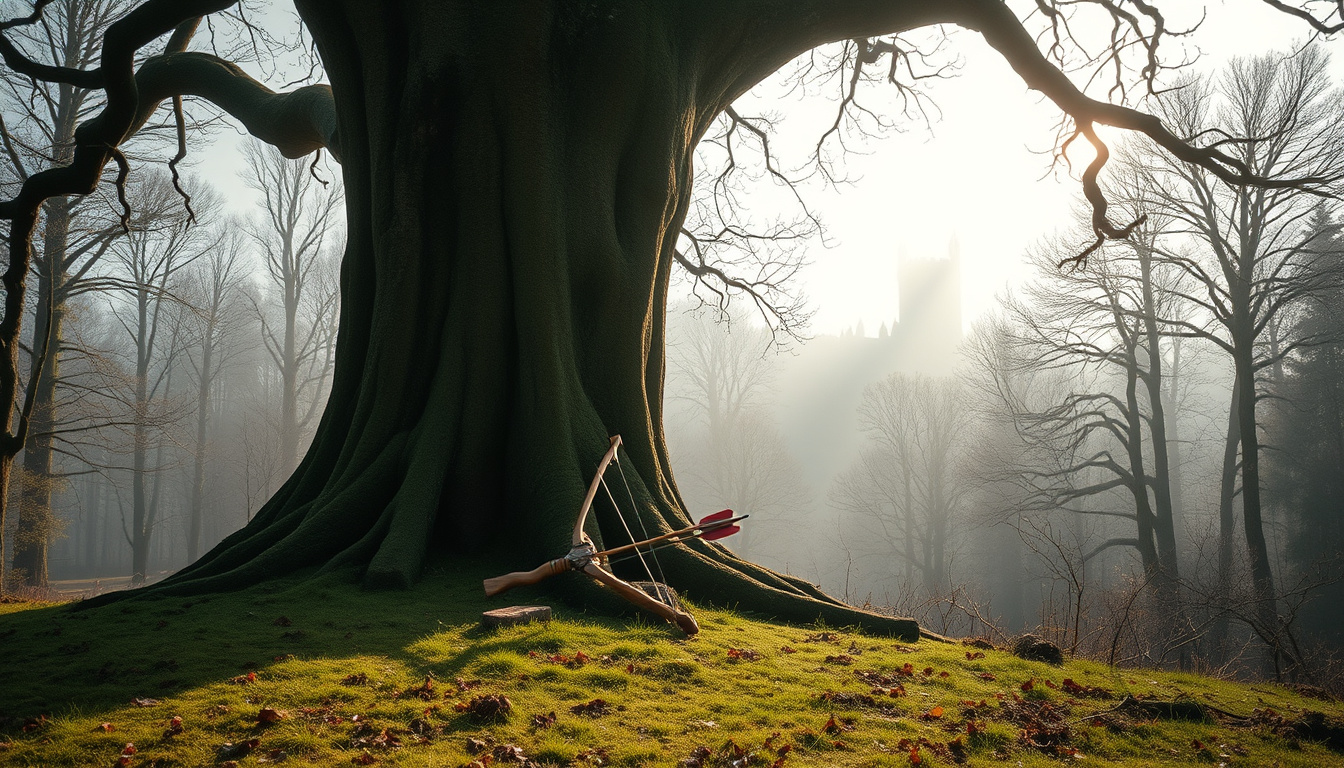

You’ve heard the name a hundred times — Robin Hood, the outlaw who robs from the rich and gives to the poor. But peel back the Hollywood green tights and the Sherwood Forest backdrop, the real story gets complicated. In fact, the earliest references to Robin Hood have nothing to do with social justice, and everything to do with a violent yeoman on the run.
Earliest known reference: 12th century ·
First appearance in print: c. 1377 (Piers Plowman) ·
Number of feature films: over 50 ·
Estimated annual tourism impact: £17 million in Nottinghamshire ·
Most common historical county claimed: Yorkshire or Nottinghamshire
Quick snapshot
- Late 12th / early 13th century England
- King Richard absent on Crusade
- High taxes and forest laws
- Outlaw in Sherwood Forest
- Steals from rich, gives to poor
- Allies: Little John, Maid Marian
- Over 50 films and TV series
- Notable: Errol Flynn, Kevin Costner, Disney
- Diverse genres: adventure, comedy, drama
- No verified historical figure
- Name was common alias or generic term
- Fictional composite
Five key facts, one pattern: the core details of the legend are well-attested in literature, but the historical evidence is thin.
| Label | Value |
|---|---|
| First mention in literature | Piers Plowman (c. 1377) (Historic UK) |
| Most famous archery feat | Splitting an opponent’s arrow (Encyclopaedia Britannica) |
| Principal opponent | Sheriff of Nottingham (HISTORY) |
| Alleged death location | Kirklees Priory, West Yorkshire (Wikipedia) |
| Modern symbol | Social justice and redistribution (BBC Bitesize) |
Is there a true story of Robin Hood?
What evidence points to a historical Robin Hood?
Several medieval chroniclers and legal records mention individuals named “Robin Hood” or similar. A Scottish chronicler, John Major, wrote in 1521 that Robin Hood and Little John flourished during the reign of Richard I (Discover Britain). Some historians have proposed candidates: a Wakefield man who took part in Thomas of Lancaster’s rebellion in 1322, or a Robert Hod from Yorkshire (Historic UK). But none of these figures are linked to the outlaw stories.
Why do historians remain skeptical?
No contemporary chronicle records Robin Hood. The name itself may have been a generic alias for outlaws — a bit like “john doe” for criminals (BBC Bitesize). The consensus among scholars is that Robin Hood is a composite or fictional figure, a bundle of folk tales attached to a name. As Professor Stephen Knight, a leading Robin Hood scholar, puts it: “There is no single source that records a real Robin Hood.”
The lack of contemporary evidence means the Robin Hood we know is a literary creation, not a historical figure. Anyone searching for a single real outlaw will come away empty-handed.
Who is Robin Hood and what did he do?
The classic legend summary
In the story most people know, Robin Hood is a skilled archer and outlaw who lives in Sherwood Forest with his band of Merry Men. He robs from the rich — particularly the Sheriff of Nottingham and Prince John — and gives to the poor. He is loyal to the rightful King Richard the Lionheart, who is away on Crusade (Encyclopaedia Britannica).
Key characters: Maid Marian, Little John, Friar Tuck
Maid Marian is Robin’s love interest, introduced in the 16th century by playwright Anthony Munday. Little John is his giant sidekick, and Friar Tuck is a jovial, combative clergyman. The Sheriff of Nottingham is the main antagonist, representing corrupt authority. These characters were not part of the earliest ballads; they were added later to flesh out the story (HISTORY).
Core narrative: stealing from the rich to give to the poor
This moral twist — the redistribution of wealth — is not present in the earliest surviving ballads. The 15th-century “Robin Hood and the Monk” shows Robin as a violent, quick-tempered outlaw who feasts and fights. The “give to the poor” element appears in the 16th-century “Gest of Robin Hood” and becomes central in later adaptations (TIME).
The very thing that made Robin Hood famous — charity to the poor — was a late addition. The early outlaw was a dangerous figure, not a social reformer.
What is the original story of Robin Hood?
Earliest ballads (13th–15th century)
The earliest surviving Robin Hood tales are often dated to the late 15th century. The manuscript “Robin Hood and the Monk” (c. 1450) depicts a yeoman outlaw who is violent, impulsive, and decidedly un-chivalrous. He fights with Little John, loses his temper, and eventually reconciles. There is no mention of robbing the rich or helping the poor (TIME).
The first printed versions
The “Gest of Robin Hood,” compiled after 1450, was the first printed narrative. It collects several ballads into a longer poem. Here, Robin still kills and fights, but the theme of opposing the Sheriff of Nottingham is clear. The Gest also introduces the idea of Robin as a loyal subject of the king (TIME).
How the legend evolved from outlaw to nobleman
In the 16th century, playwrights like Anthony Munday transformed Robin from a yeoman into a dispossessed nobleman, Robin of Loxley. This made the story more palatable to aristocratic audiences. The May Day games and folk plays of the same period also spread the legend across England (HISTORY).
The implication: the original Robin Hood was a folk villain, not a hero. The “noble outlaw” image is a later, deliberate rebranding.
Was Robin Hood a real person in history?
Historical candidates: Robert Hod, Roger Godberd
Several medieval records contain names that match. A Robert Hod was listed in the Pipe Rolls of Yorkshire in 1225; a Roger Godberd was a known outlaw in Sherwood Forest in the 13th century. But none of these men are linked to the ballads (Historic UK).
The lack of primary sources
No contemporary chronicle, legal document, or ballad places a single figure named Robin Hood in the 12th or 13th century. The first mention of the name in literature is in William Langland’s “Piers Plowman” (c. 1377) — a reference to “rhymes of Robin Hood,” not to a person (Historic UK).
Conclusion by mainstream historians
Most historians classify Robin Hood as a fictional character. As Dr. John Matthews, a historian of folklore, says: “Robin Hood is a bundle of folk tales attached to a name.” The name itself may have been a generic term for outlaws, similar to how “Jack” is used in “Jack the Ripper” (BBC Bitesize).
The pattern: the search for a real Robin Hood is a search for a person who probably never existed as the legend describes.
Did Robin of Loxley exist?
Origins of the Loxley surname
The name “Robin of Loxley” is a 16th-century invention. It first appears in Anthony Munday’s play “The Downfall of Robert, Earl of Huntingdon,” written around 1598. Munday gave Robin a noble background, naming him Robert of Loxley, an earl unjustly dispossessed by the Sheriff of Nottingham (Wikipedia).
Connection to Loxley, Yorkshire
Loxley is a real village in South Yorkshire. Some historians have speculated that the legend originated in Yorkshire rather than Nottinghamshire, because early ballads set key episodes in Barnsdale, South Yorkshire, not Sherwood Forest (National Geographic).
Literary invention by Anthony Munday
Munday’s play was a commercial success and fixed the idea of Robin as a nobleman in the public mind. Earlier ballads never mention Loxley or noble birth. The character of Maid Marian also appears for the first time in Munday’s work — she was borrowed from French pastoral romances (Encyclopaedia Britannica).
The pattern: the Loxley connection is a literary device, not a historical record. It was added to give Robin a backstory that would appeal to Elizabethan audiences.
Timeline of the Robin Hood legend
- c. 1377 — First literary reference in Piers Plowman (Historic UK)
- c. 1450 — Robin Hood and the Monk, earliest surviving ballad (TIME)
- c. 1500 — Robin Hood’s Death, first account of his death (Wikipedia)
- 1598 — Anthony Munday’s play introduces Robin of Loxley and Maid Marian (Encyclopaedia Britannica)
- 1795 — Joseph Ritson compiles definitive early ballads collection (Wikipedia)
- 1938 — The Adventures of Robin Hood (Errol Flynn) cements modern image (Encyclopaedia Britannica)
- 2018 — Robin Hood (Taron Egerton) latest major film adaptation (TIME)
What is confirmed and what remains unclear
Confirmed facts
- Robin Hood is a legendary figure, not a confirmed historical person (Encyclopaedia Britannica)
- The earliest ballads date to the 15th century (TIME)
- The “rob from the rich, give to the poor” motif appears first in 16th-century accounts (HISTORY)
What’s unclear
- Whether any specific real outlaw inspired the legend (HISTORY)
- The exact location of Robin Hood’s grave (Wikipedia)
- The historical accuracy of his noble birth — early ballads show a yeoman, not a lord (HISTORY)
Expert perspectives on the legend
“There is no single source that records a real Robin Hood.”
— Professor Stephen Knight, Robin Hood scholar (Encyclopaedia Britannica)
“Some historians think Robin Hood was an alias used by different outlaws over more than 100 years.”
— BBC Bitesize (BBC Bitesize)
For anyone curious about the real Robin Hood, the takeaway is clear: the legend is more powerful than the man who never was. And that’s exactly why it has lasted 800 years. For readers of Forrest Gump: True Story, Disability, Famous Lines & FAQs or Mr Rogers: The Real Fred Rogers vs Fictional Thomas Rogers, the same lesson applies — the line between truth and myth is often drawn by storytellers, not historians.
Frequently asked questions
Is Robin Hood a hero or a criminal?
In the earliest ballads, he was a violent outlaw. Later versions made him a hero who steals from the rich to help the poor. Modern interpretations vary.
Why is Robin Hood always shown in green?
Green was the color of outlaws and foresters in medieval England. It helped him blend into Sherwood Forest. The tradition dates back to the earliest ballads.
What is the Robin Hood investment app?
The Robinhood app is a modern stock trading platform named after the legendary outlaw. It has no connection to the historical figure.
Is the Robin Hood story considered a myth?
Yes, most scholars classify it as a folk myth or legend. The lack of contemporary evidence places it in the realm of fiction, not history.
How did Robin Hood die in the original stories?
In the 15th-century ballad “Robin Hood’s Death,” he is bled to death by a prioress at Kirklees Priory after being betrayed.
Who played Robin Hood in the 1991 movie?
Kevin Costner played Robin Hood in “Robin Hood: Prince of Thieves” (1991). Patrick Bergin also starred in a TV movie the same year.
What is the best Robin Hood movie to watch?
For the definitive classic, Errol Flynn’s 1938 “The Adventures of Robin Hood” is widely regarded as the best. For a modern take, the 2018 version with Taron Egerton offers a fresh perspective.
Related stories





Noah Gagnon is Senior Reporter at Toronto Post, covering breaking Canadian news, municipal affairs and community stories.