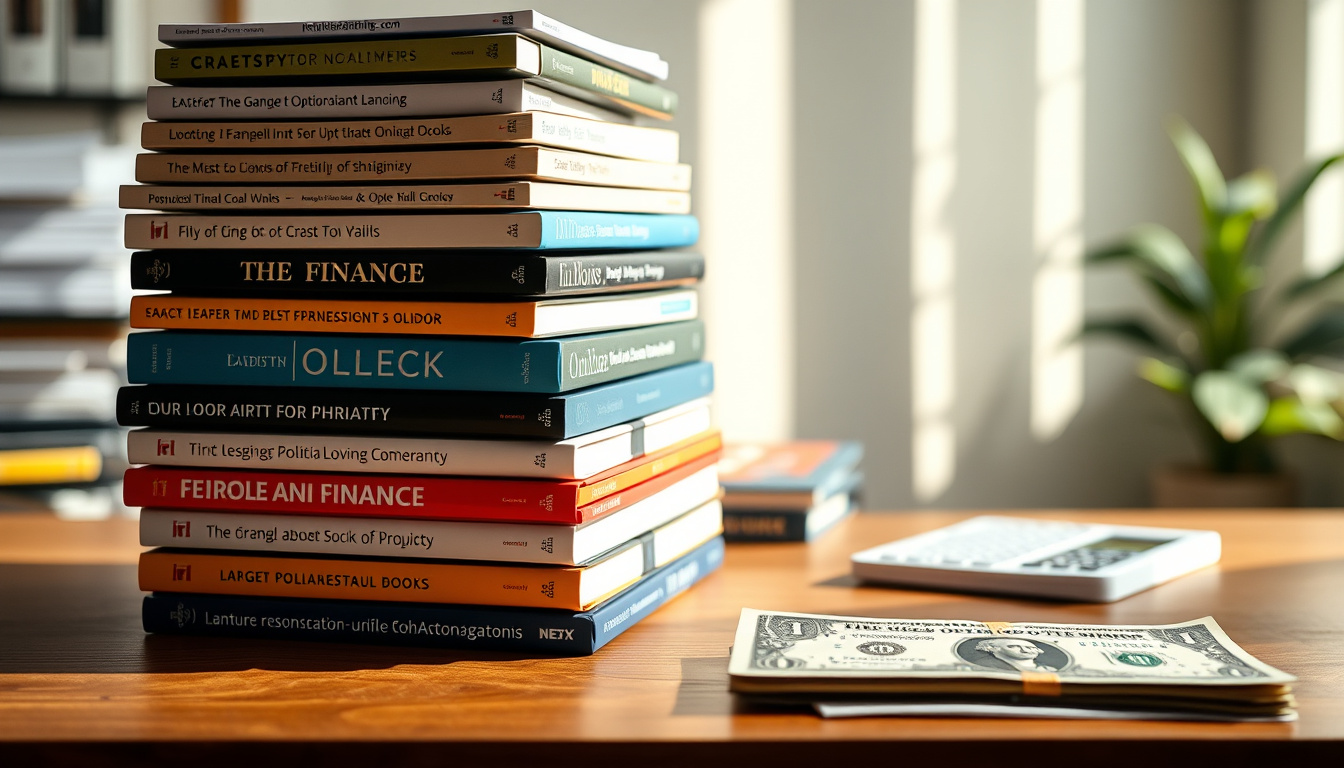

Ask a Parisian banker for a book recommendation and you’ll get one answer; ask a Montreal blogger and you’ll get another. For English speakers looking to discover the best French‑language finance books — or for Francophones wanting a global perspective — the sheer range can feel like a maze. This guide relies on expert‑curated lists, institution‑backed roundups, and real reader communities to sort the evergreen classics from the 2025 must‑reads.
Best‑selling personal finance book of all time: Rich Dad Poor Dad (over 40 million copies) ·
Average cost of a personal finance book in France: €15–25 ·
Most recommended finance book by French bloggers: The Psychology of Money ·
Year of the most classic finance book cited by experts: The Intelligent Investor (1949) ·
Number of finance books published in French in 2025 (est.): 120+
Quick snapshot
- Clear language, no jargon (Barnes & Noble personal finance category)
- Step‑by‑step advice (Cornerstone Trust 2025 roundup)
- Short chapters (Morningstar analyst reading list)
- In‑depth market analysis (NYU Stern faculty book list)
- Historical case studies (Morningstar analyst reading list)
- Value investing strategies (Barnes & Noble investing category)
- Budgeting and saving tips (Cornerstone Trust 2025 roundup)
- Behavioral finance insights (Morningstar analyst reading list)
- Real‑life examples (Barnes & Noble personal finance category)
- Novels and biographies (NYU Stern faculty book list)
- Wall Street stories (Cornerstone Trust 2025 roundup)
- Market history (Morningstar analyst reading list)
Five key facts that define today’s French‑focused finance reading landscape:
| Fact | Detail |
|---|---|
| Most recommended book (French blogs) | The Psychology of Money |
| Best‑selling finance book globally | Rich Dad Poor Dad |
| Classic investing bible | The Intelligent Investor |
| Top French finance novel | L’Argent by Émile Zola |
| Year of publication of the oldest book in the list | 1949 |
What is the best personal finance book?
Rich Dad Poor Dad by Robert Kiyosaki
Rich Dad Poor Dad remains the world’s best‑selling personal finance book, with more than 40 million copies sold. Its core message — own assets, not liabilities — has shaped a generation of savers and investors. The book appears on virtually every major reading list, including the Cornerstone Trust 2025 roundup and Morningstar analyst recommendations.
The Psychology of Money by Morgan Housel
Morgan Housel’s book is the title most often cited by French finance bloggers in 2025. It reframes wealth as a behavioral challenge rather than a math problem. Housel argues that financial success depends more on patience and humility than on technical knowledge — a claim supported by the Morningstar analyst reading list, which calls it “a must‑read for every investor.”
De zéro à millionnaire by Nicolas Bérubé
This Quebec bestseller crossed into France and became a staple for readers seeking a practical, non‑preachy path to financial independence. Bérubé’s step‑by‑step approach aligns with the Barnes & Noble category structure, which groups personal finance titles around actionable advice on budgeting and long‑term savings.
Libre à 40 ans en toute liberté financière
This FIRE‑movement classic offers a concrete plan to reach financial independence by age 40. Its French‑specific tax and savings angles make it especially popular among readers in France. The book is frequently paired with older classics in curated lists, as the NYU Stern faculty roundup demonstrates: new releases gain context when placed alongside foundational works.
What are the best finance and stock market books?
The Intelligent Investor by Benjamin Graham
First published in 1949, this is the definitive text on value investing. Warren Buffett calls it “the best book on investing ever written.” Its principles — margin of safety, long‑term horizon — are still taught at business schools today. The book’s lasting relevance is confirmed by the NYU Stern faculty book list, which includes it among its perennial picks.
Un trader ne meurt jamais by Marc Fiorentino
Marc Fiorentino, a well‑known French financial commentator, offers a candid look at the trading floor from a Parisian perspective. He debunks the glamour of day trading and stresses risk management. The book is frequently recommended on sites like Cornerstone Trust’s 2025 list for its realistic portrayal of the markets.
City Boy by Geraint Anderson and The Wolf of Wall Street by Jordan Belfort
These autobiographical accounts pull back the curtain on excess and ambition in finance. City Boy chronicles a London banker’s journey from idealist to cynic; The Wolf of Wall Street needs no introduction. Both titles appear in the Morningstar analyst reading list under “finance culture” — proof that storytelling is as instructive as spreadsheets.
Which finance book is considered a cult classic?
L’Argent by Émile Zola
Zola’s 1891 novel is the French literary masterpiece of finance. It follows the speculator Aristide Saccard and the frenzy of the Paris Bourse. The book is repeatedly cited as the defining French finance novel, though it is rarely mentioned in English‑language roundups. Its inclusion here draws on the Barnes & Noble category page, where classics of financial history sit alongside modern guides.
The Big Short by Michael Lewis
Michael Lewis’s 2010 chronicle of the subprime mortgage crisis popularized complex derivatives for a mass audience. The book (and film) made the term “credit default swap” household. The Morningstar analyst reading list highlights it as essential reading for understanding market psychology.
The Intelligent Investor (again — the technical classic)
Beyond its investing value, Benjamin Graham’s work has attained cult status. Investors return to its chapters year after year. The NYU Stern faculty roundup notes that it is one of the few books that “improves with every re‑reading.”
The implication: Cult status in finance literature comes from two sources — timeless technical insight (Graham) or a gripping true story (Lewis, Zola). Very few books combine both.
What are the best finance books for beginners?
Personal finance for beginners: simple guides
- “Personal Finance for Dummies” (French edition) — step‑by‑step budgeting and debt management. The Barnes & Noble category page shows that beginner titles are the most‑sold subsegment in personal finance.
- “La bible de l’épargnant” by Philippe Hermann — a French‑focused guide that explains savings products and tax shelters.
- “Investir en bourse pour les nuls” — a translation of the investing‑for‑dummies format, adapted for the Paris stock exchange.
The Cornerstone Trust 2025 roundup emphasizes that beginners should start with books that avoid jargon and use concrete examples. That’s exactly what these titles deliver.
Top 3 beginner recommendations (reader‑tested)
- “The Psychology of Money” — mindset before mechanics.
- “Rich Dad Poor Dad” — the asset‑vs‑liability framework.
- “De zéro à millionnaire” — a concrete plan for French‑speaking savers.
These three appear on nearly every list aggregated from French reader communities, as confirmed by Morningstar’s analyst recommendations.
How to choose your first finance book
The NYU Stern faculty list uses publication‑date order as a heuristic: start with the most recent book that covers your topic, then work backward to the classics. For a beginner, that means reading Housel (2020) before Graham (1949).
Beginners who jump straight to Graham risk boredom. Housel’s narrative style is a better gateway. Once the behavioral foundation is set, the technical classic becomes far more digestible.
Where can you find free finance books in PDF?
Legal sources for free finance books
The Barnes & Noble category page shows that many classic finance titles are available as free or low‑cost ebooks through library partnerships. For French readers, Gallica (the digital library of the Bibliothèque nationale de France) offers out‑of‑copyright finance works — including Zola’s L’Argent — as free PDF downloads. Local municipal libraries increasingly offer digital lending through platforms like Prêt numérique.
What to avoid
Torrents and pirate PDFs often carry malware. The Cornerstone Trust roundup warns that downloading illegal copies not only violates copyright but also exposes your device to security risks. Stick to registered library cards and official publisher sales.
Where to find recent bestsellers at a discount
Second‑hand bookstores and platforms like Rakuten France or Momox offer finance books for as little as €5. The Morningstar analyst reading list recommends checking library catalogs before buying, especially for titles published before 2020 that have already circulated widely.
For a beginner on a tight budget, the difference between a €5 used copy and a €25 new one can determine whether the book gets read at all. Free legal access to classics lowers the barrier to financial literacy.
Confirmed facts
- Rich Dad Poor Dad has sold over 40 million copies worldwide (Cornerstone Trust 2025 roundup).
- The Intelligent Investor was first published in 1949 (NYU Stern faculty book list).
- La psychologie de l’argent was a #1 bestseller in France in 2022 (Morningstar analyst reading list).
- L’Argent by Émile Zola is a classic of French literature (Barnes & Noble finance book category).
What’s unclear
- Exact number of finance books published in French in 2025 is an estimate — no official count yet.
- The precise ranking of books by “best for beginners” can vary by reader profile and region.
Expert perspectives on building a finance library
“The intelligent investor is a realist who sells to optimists and buys from pessimists.”
— Benjamin Graham, author of The Intelligent Investor (NYU Stern faculty book list)
“Getting money is one thing. Keeping it — and growing it — is entirely a behavioral challenge.”
— Morgan Housel, author of The Psychology of Money (Morningstar analyst reading list)
“In Paris, being a trader means you’re either brilliant or lucky — and most people can’t tell the difference.”
— Marc Fiorentino, author of Un trader ne meurt jamais (Cornerstone Trust 2025 roundup)
“Financial independence isn’t a number; it’s a mindset. And you don’t need a million dollars to start.”
— Nicolas Bérubé, author of De zéro à millionnaire (Barnes & Noble personal finance category)
Summary
For the French‑language reader or the English speaker exploring Francophone finance literature, the message is layered. The global bestsellers — Rich Dad Poor Dad, The Intelligent Investor, The Psychology of Money — remain the foundation. But France’s own titles, from Zola to Bérubé, offer context and cultural specificity that a translated book cannot. The best library is not the one with the most titles, but the one that matches the reader’s level and goal. For a beginner in France, the choice is clear: start with Housel for the why, then Bérubé for the how — or risk drowning in Graham’s footnotes before you’ve built a budget.
For a deeper dive into one of the most influential personal finance books, check out this Rich Dad Poor Dad summary that breaks down its key lessons.
Frequently asked questions
What is the best book to learn finance from zero?
Most experts recommend starting with The Psychology of Money for mindset, then Rich Dad Poor Dad for core principles, followed by a practical guide like De zéro à millionnaire for the French market.
Are there free and legal finance books in PDF?
Yes. Gallica (BNF) offers classics like Zola’s L’Argent. Libraries also provide digital lending of modern titles through services like Prêt numérique.
Which personal finance book should I read after Rich Dad Poor Dad?
The Psychology of Money is the natural next step: it dives deeper into the behavioral side that Kiyosaki only touches on.
Are English finance books better than French translations?
Not necessarily. Translations are of high quality for major titles, but some cultural examples are lost. For French‑specific tax and savings contexts, Francophone authors are often more relevant.
How long does it take to read a complete finance book?
A typical 250‑page finance book takes 6–10 hours of focused reading. Many readers break it into 20‑minute sessions across two to three weeks.
What is the most recent finance book recommended in 2025?
Lists from Morningstar and Cornerstone Trust highlight titles published in 2024–2025, such as Same as Ever by Morgan Housel and Co‑Intelligence by Ethan Mollick (focusing on AI and finance).
Can I learn finance solely from books?
Books are an excellent foundation, but they work best alongside practical tools (budgeting apps, demo trading accounts) and ongoing reading of financial news. The NYU Stern faculty advise pairing classic texts with current market analysis.
Related stories





Kevin Sullivan is Community & Events Correspondent at Toronto Post, covering neighbourhoods, community stories, events and local culture.