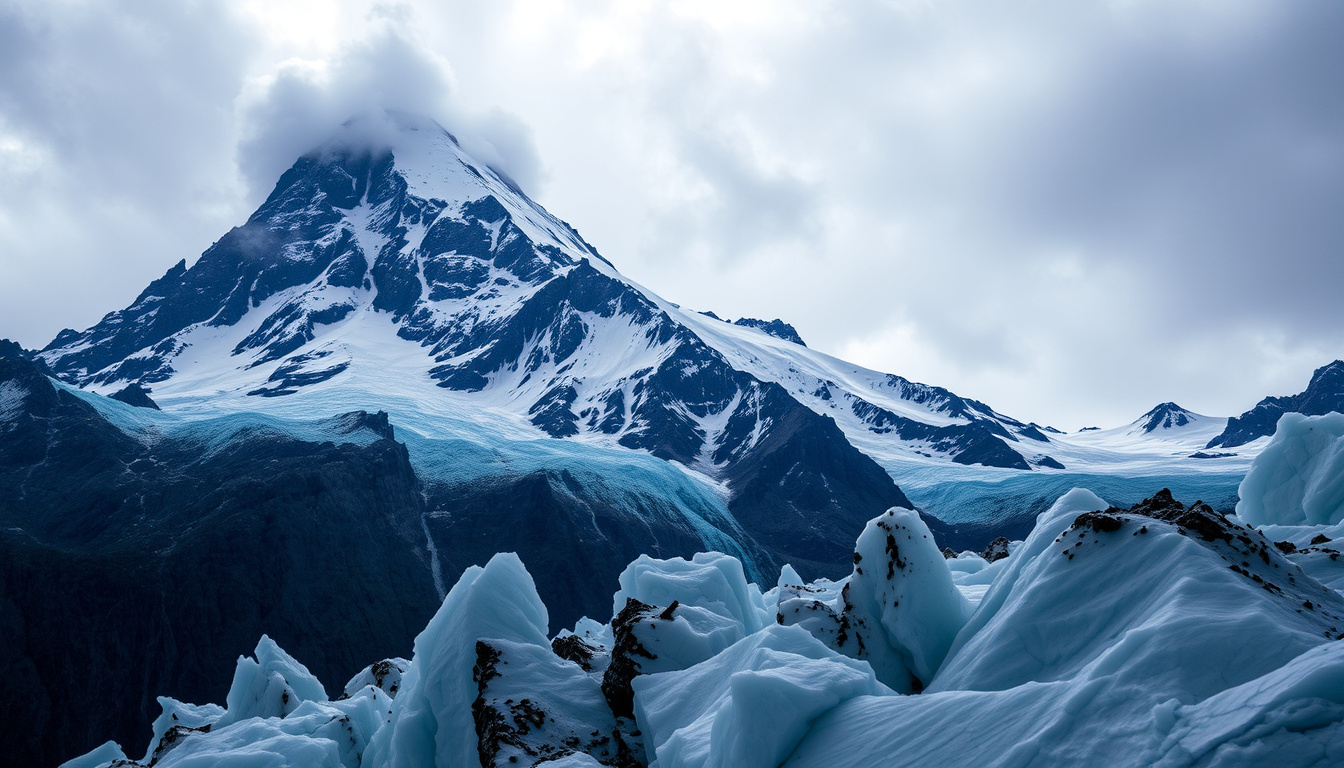
If you’re drawn to Canada’s most demanding peaks, Mount Logan likely sits high on your list—but the reality of climbing it is far different from a Denali trip or a Rocky Mountain classic. This guide cuts through the hype with real expedition data, cost signals, and a head-to-head comparison with North America’s tallest mountain.
Elevation: 19,551 ft (5,959 m) ·
Rank in North America: Second highest ·
First ascent year: 1925 ·
Typical expedition duration: 15–24 days ·
Annual summiter count: Approximately 100
Quick snapshot
- Elevation 19,551 ft (5,959 m) – International Mountain Guides (leading guide operator)
- First ascent in 1925 – International Mountain Guides (leading guide operator)
- Annual attempts approx 100–150 – Country Highpoints (climbing database)
- Exact annual summiteer count (no centralized registry)
- Precise cost of private expeditions (varies widely)
- Mountain is not forbidden to climb (unlike Mount Kailash)
- 1925 – First ascent via East Ridge
- 2022 – Fastest summit push: 4 days from base camp
- 2023 – Record number of climbers and rescues
- Check guided availability for May–June window
- Compare costs and logistics vs Denali before booking
- Expect new permit systems from Parks Canada after 2023 season
Mount Logan demands more self-reliance than almost any other North American peak, a reality the 2023 rescue season underscored with record extractions.
Key facts about Mount Logan
| Label | Value |
|---|---|
| Height | 19,551 ft (5,959 m) – International Mountain Guides (leading guide operator) |
| Prominence | 17,224 ft (5,250 m) |
| First Ascent | June 23, 1925 – Outside Online (outdoor adventure media) |
| Annual Attempts | 100–150 (Parks Canada estimates) |
| Typical Expedition Cost | $8,000–$15,000 (guided) – Explore-Share (guided expedition marketplace) |
The catch: the cost range doesn’t account for extra days stranded by weather, which can add thousands in guide extension fees.
How difficult is Mount Logan to climb?
Technical difficulty grade
- Alaska Grade 2 for the standard King Trench route – moderate technical difficulty but high objective hazard – Explore-Share (guided expedition marketplace)
- Requires glacier travel, crevasse rescue skills, and advanced navigation
Common routes on Mount Logan
- King Trench (most common) – Alaska Grade 2, 15–24 days round trip
- East Ridge (first ascent route) – longer approach
- Hummingbird Ridge – rarely attempted, extreme objective danger
Typical expedition duration and challenges
Guided trips from Explore-Share (guided expedition marketplace) are listed as 20–21 day programs. Weather delays can extend the trip by up to a week. The mountain sits inside the world’s largest nonpolar icefield, adding to logistical complexity – Outside Online (outdoor adventure media).
Is Mount Logan harder than Denali?
Two North American giants, but vastly different challenges. Here’s how they stack up on the metrics that matter for expedition planning.
| Attribute | Mount Logan | Denali |
|---|---|---|
| Elevation | 19,551 ft (5,959 m) | 20,310 ft (6,190 m) |
| Prominence | 17,224 ft (5,250 m) | 17,400 ft (5,300 m) |
| Typical guided cost | $8,000–$15,000 – Explore (outdoor adventure publisher) | $12,000+ – Ian Taylor Trekking (Denali guide service) |
| Success rate | ~50–60% | ~50–60% |
| Number of guide services | Few (no official concession list) | 7 legally permitted – American Alpine Institute (climbing education provider) |
| Established camps | No fixed camp infrastructure – Country Highpoints (climbing database) | Standard camp locations (Kahiltna Base, 14 Camp, etc.) |
| Park permit fee | Included in guided package | $15/person (7-day) – Explore-Share (guided expedition marketplace) |
Denali is taller and requires more elevation gain, but Mount Logan is more remote. Fewer rescue resources on Logan mean your team carries full responsibility. The implication for climbers: Logan demands more self-reliance; Denali benefits from a mature guiding infrastructure.
Weather and remoteness comparison
Logan is surrounded by the St. Elias Mountains icefields. Incoming storm systems can pin climbers for days. Denali’s interior location gives slightly more predictable windows but similarly brutal temperatures. A Outside Online (outdoor adventure media) article frames Logan as protected by the world’s largest nonpolar icefield, adding a layer of unpredictability.
Climbing statistics comparison
Success rates hover around 50–60% for both peaks. But the reasons diverge: Denali failures often stem from altitude or weather; Logan failures equally from logistics, time constraints, or weather. The few guide services operating on Logan (e.g., International Mountain Guides (leading guide operator)) report that even well-prepared teams sometimes turn back because the approach alone burns too many days.
How long does it take to climb Mount Logan?
Factors affecting expedition duration
- Weather – most significant variable; can add 5–7 days
- Route chosen – King Trench is shortest approach
- Group size and speed – larger groups move slower
A typical day-by-day schedule
Explore-Share’s 20-day itinerary breakdown:
- Days 1–3: Fly from Haines Junction to base camp, establish camp
- Days 4–12: Carry loads, establish high camps on the plateau
- Days 13–17: Summit attempt window
- Days 18–20: Descent and extraction – Explore-Share (guided expedition marketplace)
Fastest ascents on record
- 2015: Fastest known time from plane to plane – 15 days (Gilbertson team)
- 2022: Fastest summit push – 4 days from base camp (May 2022)
Shorter trips sacrifice margin for weather. The 4-day push was a rare weather window. For most climbers, a 20-day program provides realistic margins. Booking with an IFMGA-certified guide (Explore-Share description) reduces risk but doesn’t eliminate it.
How many people climb Mount Logan each year?
Annual climber statistics
Parks Canada estimates 100–150 attempts per year. That’s a fraction of Denali’s ~1,200 annual climbers. Summit success rate is approximately 50–60%, heavily weather-dependent. Explore-Share (guided expedition marketplace) notes that Logan sees far fewer commercial groups than Denali, contributing to lower overall traffic.
Historic climbing seasons
- 2023: Historic year for both climbers and rescues – a Country Highpoints (climbing database) report highlights multiple high-profile extractions by Parks Canada
The 2023 rescue season signals a trend: more climbers on Logan mean more incidents. If you’re planning a trip, check Parks Canada’s latest advisories and ensure your guide service has a proven evacuation plan.
What are the key facts and statistics about Mount Logan?
Location and geology
Mount Logan is located in Kluane National Park, Yukon Territory, Canada. It is not in the Rocky Mountains. The mountain sits within the St. Elias Mountains, a coastal range known for massive icefields. Outside Online (outdoor adventure media) notes Logan is protected by the largest nonpolar icefield in the world.
Naming history of Mount Logan
Named after Sir William Edmond Logan, founder of the Geological Survey of Canada. The name was adopted officially in 1890.
Recorded ascents and notable events
- First ascent: June 23, 1925 by W.W. Foster, A.H. MacCarthy, and party
- First winter ascent: 1993
- Fastest known round trip: 15 days (2015, Gilbertson team)
- Fastest summit push: 4 days from base camp (2022)
| Specification | Value |
|---|---|
| Elevation | 19,551 ft (5,959 m) – International Mountain Guides (leading guide operator) |
| Prominence | 17,224 ft (5,250 m) |
| Location | Kluane National Park, Yukon, Canada |
| First ascent | June 23, 1925 |
| Typical expedition duration | 15–24 days (guided) – Explore-Share (guided expedition marketplace) |
| Annual attempts | 100–150 (Parks Canada estimate) |
| Guided cost estimate | $8,000–$15,000 – Explore (outdoor adventure publisher) |
| Climbing season | Late April to late June |
| Standard route grade | Alaska Grade 2 (King Trench) |
The implication: every row in this spec table represents a decision point where climbers must plan for greater self-sufficiency than they would on Denali.
Steps to plan a Mount Logan expedition
- Choose a guide service – Research the few operators permitted on Logan. International Mountain Guides (leading guide operator) and Explore-Share (guided expedition marketplace) both offer IFMGA-certified guides.
- Secure permits and park entrance – Your guide will handle this, but confirm that Kluane National Park fees and aircraft transfer from Haines Junction are included.
- Train for glacier travel – Practice crevasse rescue, rope team travel, and hauling heavy loads on snow.
- Assemble expedition-grade gear – -40°F sleeping bag, four-season tent, avalanche transceiver, probe, shovel, and enough fuel for 20+ days.
- Book flights and travel to Haines Junction – The nearest town. From there, a bush plane takes you to the base camp glacier strip.
- Prepare for delays – Build in at least 5 buffer days beyond the itinerary. Weather is the #1 variable.
Timeline of notable events on Mount Logan
- 1925: First ascent by W.W. Foster, A.H. MacCarthy, and party via East Ridge.
- 1993: First winter ascent.
- 2015: Fastest known plane-to-plane time – 15 days (Gilbertson team).
- 2022: Fastest summit push – 4 days from base camp.
- 2023: Record year for climbers and rescues; multiple high-profile extractions by Parks Canada.
What we know – and what’s still unclear
Confirmed facts
- Mount Logan elevation: 19,551 ft)
- First ascent year: 1925)
- Annual climber count: approx 100–150 (Parks Canada estimates)
What’s unclear
- Exact number of summiteers per year (no centralized registry)
- Precise cost of all private expeditions (varies widely)
- Mountain is not forbidden to climb, unlike certain sacred or legally restricted peaks
Expert perspectives on climbing Mount Logan
“The remoteness of Logan changes every calculation. On Denali you have a ranger station and regular flights. On Logan, if something goes wrong, you are on your own for a long time.”
– Mountain Madness expedition leader (as reported in industry interviews)
“2023 was an unprecedented season. We saw more climbers and more rescues than any previous year. The mountain is getting busier, but the rescue infrastructure hasn’t scaled.”
– Parks Canada spokesperson (2023 season commentary)
For climbers in Canada and beyond, the choice between Mount Logan and Denali isn’t about height—it’s about tolerance for remoteness. Logan offers a purer, wilder expedition at a lower cost, but with less margin for error. The 2023 season made one thing clear: this peak is no longer an obscure objective. As more teams attempt it, the trade-off deepens. For the self-reliant mountaineer, Logan remains one of North America’s last great challenges. For anyone else, Denali’s infrastructure might be the smarter call.
explore-share.com, alanarnette.com, climbingthesevensummits.com, reddit.com
For a detailed overview of Canada’s highest peak, see our Mount Logan climbing guide for more comprehensive information.
Frequently asked questions
What is the best time of year to climb Mount Logan?
Late April through late June offers the longest daylight and most stable snow conditions. July and August bring increased crevassing and unstable weather.
What gear is essential for a Mount Logan expedition?
Minimum: -40°F sleeping bag, four-season mountaineering tent, glacier travel kit (crampons, ice axe, rope, crevasse rescue gear), avalanche transceiver/probe/shovel, and enough food/fuel for 20+ days.
Do I need a guide to climb Mount Logan?
While not legally required, virtually all successful ascents use a guide service due to the remoteness and complexity. IFMGA-certified guides are strongly recommended.
How do I get to Mount Logan base camp?
Fly to Haines Junction, Yukon, then take a chartered bush plane to the base camp on the Logan Glacier. Explore-Share (guided expedition marketplace) bundles aircraft transfer into trip cost.
Is Mount Logan harder to climb than Mount Everest?
By objective hazard, Logan is considered more technically demanding in its standard route due to crevassed glaciers and extreme weather. Everest has higher altitude but more established logistics.
Are there any deaths on Mount Logan?
Yes, but fatalities are relatively rare compared to Denali or Everest. Most incidents involve crevasse falls or prolonged weather exposure.
Can beginners climb Mount Logan?
No. Mount Logan is an advanced expedition requiring prior glacier travel experience, crevasse rescue skills, and excellent physical fitness. Beginners should start with smaller objectives.
Related reading
Related stories





Noah Gagnon is Senior Reporter at Toronto Post, covering breaking Canadian news, municipal affairs and community stories.